Wednesday, 2 May 2018

The case of the ‘sprained ankle’: A reflection on the narrative of ‘harm’

Harm, harmed and harmful are words we hear daily in a range of contexts. In the world of MSK Physiotherapy, there has been a lively debate, relating to the ongoing use and abuse of those labels. Indeed, it has even been suggested that we should spend less time talking about the narrative of 'harm' and more time getting on with the task in hand. As uncomfortable and temporarily distracting as it may be, exploring in detail the psychosociology of the development of the 'harm' narrative, will allow us to do exactly that.  

It is clear, that everyone has their own frame of reference for their interpretation, context and use of the term 'harm', together with the narrative that goes with it. In any debate or discussion, it is helpful to form a view or even ask, exactly why or how someone formed their own views or perspective on a topic. Here's my own perspective on 'harm' ... a personal story, grounded in altered haemodynamics, musculoskeletal trauma, clinical reasoning and decision making. 

I’m going to tell you a very personal tale of actual, real measurable  material harm, as a direct result of inappropriately applied health care. It is a story which I wrote, but never thought I would publish. I have only ever revealed it to a handful of people, so as I take you (as a reader) into my confidence, do bear with me, as I eventually get to my point. It may go some way to explaining why for me, asking for harm data, is not some kind of game, but rather a serious and genuine question, with a potential end goal in mind.


I’d not been qualified that long as a Physiotherapist, when my Mother suffered an injury. It is a story in keeping with the title of this BLOG. My Mother’s name was Jessie … and my wife always described her as a Mrs Pepperpot like character. She was in her early 70’s, a short rotund, jocular lady who always seemed full of fun. She enjoyed painting, flower arranging, pottering about in her extensive garden and, as she called it ... “bending her tummy” (going to the Church hall exercise class). She phoned me on the day she twisted her ankle in the garden, I had a quick look, but she was in a lot of pain and the ankle was already very swollen. I decided to take her to the GP. He examined her and confidently explained from his physical tests that she had ‘sprained’ her ankle. He advised her to rest, ice, compress and elevate, the management recipe (at the time) for such injuries. I took her home and we dutifully followed the Doctor’s instructions, but I remember she was in a lot of pain and she could hardly weight bear. I was a little worried, but I tried to re-assure her, and left her with an ice pack and her leg propped on up on pillows, telling her that I would be back the next morning.

The next morning things were not good, she told me she had had a terribly painful night and could not stand the weight of the bed clothes on her ankle, I looked at the ankle and a bluey-red bruise was already apparent and the swelling could only be described as like a balloon. I called the Doctor; he listened patiently to my description, then re-assured us that this was a “normal soft tissue response to injury”. He advised some analgesia and a little gentle movement “as tolerated” and to continue with the RICE regime. I managed to locate a pair of crutches in the loft (every physio has crutches in the loft … don’t they?) and proceeded to teach her how to use them to get around. She seemed a little happier now that she could potter about a little and the analgesia was taking effect. Two weeks later, she was still unable to weight bear properly and remained in a lot of pain. Despite the RICE regime the ankle remained very swollen, very painful and very sensitive to touch.


Now a little worried, I’d been scanning the text books (back in the days before Google) and found the section on traumatic avulsion fractures of the ankle. I asked her if she had felt or heard anything when the ankle twisted? She paused briefly, and said, “just a popping sound like a chicken bone”. My eyes widened and I reached for the phone. I explained the situation and the Doctor agreed to see her at the end of his list. He had another look and this time tried to palpate the lateral malleolus … Jessie almost jumped through the ceiling … “It’s terribly tender Doctor, you can’t really touch it,” she explained, clearly embarrassed. “Mmmmm” he said, “I think we’d best send you for an X Ray, just to check” he reassured her with a smile. “Do you think it might be broken Doctor?” she asked, looking a little worried. “We can’t really tell till you’ve had an X ray,” he explained. “So I think we’d best be on the safe side”.

Sure enough, the X Ray at the local hospital revealed a small avulsion fracture of the lateral malleolus and it was decided to treat it with a back slab immobilisation because of the extensive swelling. She seemed much happier now that she had a diagnosis and the smile had returned to her face as she joked with the medical staff and toddled off (non-weight bearing) with her crutches.

6 weeks later she returned to the fracture clinic, the back slab was removed, an X Ray taken, and she was given the all clear to begin to weight bear “as tolerated”. I quietly listened to the instructions and exercises given by the physios and secretly suspected that my role would be to provide a little encouragement and guidance. As it happened, my role was minimal as she got on with the prescribed exercises and steadily began the process of weight bearing. Two weeks later she had progressed to a stick and things were going famously, but one thing troubled her, although the pain was now manageable, it still seemed very swollen. I reassured her that that was probably normal and that it would go down in time. It did go down… until 4 weeks later.

“I’m a bit worried,” she said, when I called round. “I’ve been pottering in the garden and I think I must have a rash or something, my ankle has gone all swollen again” and look at it” she said, pointing to the red, swollen ankle resting on the pillow. I’d never thought to measure the swelling (clinical tip), but it looked much more swollen to me and it was certainly redness extending up to the calf. “Can I touch it,” I asked, leaning forward to palpate the ankle “gently,” she said, “oh and my calf has started to hurt too,” she added. I pressed my thumb and fingers into the warm, swollen tissue, they left an indentation, there was obvious pitting oedema. Deep vein thrombosis came flooding back to my mind, I recalled the lectures, the text books, red, hot swollen, pitting oedema, history of trauma, immobilisation, Virchow's Triad etc. etc. 


We were soon sitting in the Doctors waiting room. “What seems to be the problem Jessie?” he said smiling. She took of her shoe and sock and without a word nodded at the swollen, red ankle. “Mmmm …” he said again, observing the temperature and pitting oedema, it looks like a case of phlebitis he said confidently. “Oh dear, that sounds bad” exclaimed Jessie, speaking up for the first time. “Oh … it’s nothing to worry about," said the Doctor reassuringly, noting her alarm at the undecipherable medical jargon (clinical tip). “We see it quite commonly after periods of immobilisation, we need to keep an eye on it, and if things don’t settle down, you may need some anti-inflammatories or maybe antibiotics for the inflammation. Oh … and I’ll ask the nurse to get you some compression stockings”. The Doctor seemed very confident and I was a newly qualified Physiotherapist barely making sense of all the information I’d acquired, but I couldn’t help myself … “How can you be sure that it’s not a DVT,” I stuttered unconvincingly, my mind racing. He shot me a glance, and putting two and two together accurately said, “Aaah … I remember now, Alan … you’re fresh out of Physiotherapy School aren’t you? Where are you working these days?” He paused, clearly thinking through his response, I didn’t answer. “Well we can never be entirely certain with these things, but I’ve seen lots of similar cases and I think it is phlebitis … BUT (he said with emphasis) we should keep an eye on it and if things don’t improve we’ll need to send Jessie back to the hospital for some tests.” 

4 or 5 days later (I don’t recall exactly) Jessie became feverish and breathless and was rushed into the local hospital. Everything was a blur, I vaguely remember some discussion and argument among the Doctors about her diagnosis. Eventually, she was sent for Duplex ultra-sound scans and was urgently medicated for the DVT that was revealed on the scans. She died in hospital 2 days later from the complications of a pulmonary embolus. The post mortem detailed both pathologies very clearly.


The family were naturally shocked, her granddaughters were too young to understand that they would miss out on hours of fun, painting, flower arranging and pottering in the garden with their grandmother. The pain of the event was immeasurable and had an impact across generations. There was talk among Jessie’s brothers and sisters, of misdiagnosis and medical malpractice; my head was in a spin. I arranged a meeting with the medical director of the hospital and the GP. We discussed the case and the events that led to Jessie’s death … they acknowledged that the management perhaps could have been different … that clinical decisions could have been expedited, the tests done quicker. I observed the pained look on their faces. They called it a “tragic case”. I asked them if they had learnt anything, the GP hung his head. Nothing came of it, no blame was apportioned and the family chose not to pursue a medico-legal case. I was relieved; it would have been too painful. I did make a request though, that they use the root cause analysis of the case as training for medical staff, Doctors, Nurses and Physiotherapists alike.

So … how do you reflect on a case like that, and what prompted me even to tell the story?

Well actually it was and still is, the current narrative in MSK physiotherapy that re-awakened the memory of this case and prompted me to want share the story.

I’ve watched with increasing discomfort and dismay, a range of prominent SoMe commentators from top researchers, bloggers, to every day Twitterati (including patients), confidently asserting that certain physiotherapy management methods are, in their words ... “harmful”. When I politely ask for data to support this contention, it becomes clear that (to date) there is no data. There is however, a quite reasonable associative argument, which though clear to see, remains unquantified. A debate has ensued and is still ongoing, about the use and definition of the word ‘harm’ and it became apparent that there are many. Similarly, everyone has their own particular frame of reference for their interpretation and context for the use of the term 'harm'.

If we go back to Jessie’s case in the cold light of day, the raw data = 1 premature death. 

Was there measurable harm? .... Yes.

Was there immeasurable harm? ... Very likely.


The unmeasured psychological trauma has not been captured … how could it be (effectively)? 

Was that down to the treatment/management in this case?

Maybe, … it certainly could be ascribed (in part) to delayed/misdiagnosis. Above all, it was down to errors in clinical decision making, and that is what clinical encounters will always be down to … doing the right thing, at the right time for the right patient, or as Greg Lehman would say, 'being a good clinician'.

A judgement on whether emotional distress is harmful or not, is entirely down to the ideas and beliefs of the individual. The very same thing applies to claims about treatments for MSK conditions. A period of ‘wrong’ management, may well have delayed the application of the ‘right’ management (an ever shifting phenomenon in most MSK domains). That (in most cases) won’t result in a measurable adverse event, but it could easily be an adverse or negative factor (physically, psychologically or socially) affecting ultimately, the recovery of the patient from whatever ails them.

Is that harmful? 

... and if it is (?), are we able to successfully identify when it transitions into harm ?


Clearly, all of THAT remains open to debate. All we can say is that IF a treatment is deemed ‘harmful’ … then it would be helpful to find a way to measure that harm. With that knowledge, in order to prevent further harm, action could be planned and taken. To do this we would have to take into account the evidence on efficacy of treatments, the health economics literature, the (captured) adverse events data; we have to listen to patient opinions about what they consider to be value or effective care, or harmful care, in a range of environments and from a range of experiences. It is clearly a very complex multi factorial topic, which has no easy answers and (currently) appears dominated more by emotion and volume than reason. 

The polarisation of the debate and the ongoing manipulation of language, creates fear and uncertainty, and gives impression that there is only one solution.

This BLOG post was NOT written or designed (because it contained a personal story) to be impermeable to critique, neither is it to suggest some kind of victim-hood, that would not have been Jessie's style nor is it mine. A single case study does not create or demolish a narrative. It may just however, explain the context of why I find the current physiotherapy narrative of harm uncomfortable, difficult, unnecessarily divisive. I wouldn't go as far as to say I'm personally harmed by it, but it is certainly one reason why I speak out against it. None of this makes me right either, and my own (or Jessie's) narrative does not negate anothers, everyone will have their own perspective and frame of reference for analysing the topic. 

If this story promotes a just a moment of critical thinking in 1 single person ... then it will have achieved its objective. That said, It would be really nice to see a positive outcome of this debate, a lot less conflict and even perhaps, an agreement  on a way forward. I know that Jessie would have been thrilled if she could have been, even a tiny part of that process. 

Thanks for listening and for getting this far ...

Please feel free to comment or critique in the usual way.

Footnote: Jessie of course, did not die of a sprained ankle (that would be UNSPEAK). Sprained ankles are not really harmful per se, and the doctors, nurses and therapists who deal with them, equally do not routinely deliver 'harmful' care. Jessie died from a pulmonary embolus due a complex series of human clinical decisions and events. Something I can only attempt to square up or put down to ‘the frailty of humans’. The root cause analysis of her case, made for an interesting, yet painful read.

I’m unsure whether it was irony or destiny that took my physiotherapy career and specific interest, down the route of vascular speciality and medico-legal work specialising in adverse vascular events and clinical reasoning errors. I try to see some ‘good’ in that. 

I've seen some very interesting and illuminating cases of real measurable, material harm and ongoing physical and psychological disability, linked directly to physiotherapy interventions over the years ... and still the cases still trickle in. 
 
HT to Blaise Doran, Carl Davies, Greg Lehman and a few others who in their own ways, have helped me to shape and tell this story. 


Author: Alan J Taylor is a writer and critic who tries to think about stuff . He works as a Physiotherapist, University Assistant Professor and Medico-Legal expert witness whilst maintaining a small clinical work load. The views contained in this blog are his own and are not linked to any organisation or institution.  He once rode the Tour of Britain and worked as a cycling soigneur. He still enjoys riding a bicyle through the leafy lanes of Nottinghamshire and Derbyshire. In a World full of conflict and division ... like Bukowski, he 'writes to stay sane'.

Wednesday, 1 November 2017

Massage: Confessions of a cycling soigneur .... (Part II)

This year the cycling Tour of Britain went right past my house. The rather eerie coincidence of the 175km Stage from Mansfield to Newark passing so close to home, has not passed me by (I wrote about a similar 175km stage in - ‘Massage: Confessions of an ex-pro cyclist – Part 1’).

In the follow up to Part I, I take a look at the role of the soigneur in professional cycling and consider the science behind the art. For those perhaps unfamiliar with the term, it is French for a caretaker or carer, literally a person who gives massage, and other assistance to a team, during a cycle race. My experience as a soigneur in cycling was short and sweet (I’ll explain why at the end of this blog) with stints on the Tour of Guadeloupe, Rapport Tour in South Africa,  and a follow up on the London-Paris Triathlon.


Tour of Britain


The job is much more challenging than many would appreciate and involves considerably more than massage. In short, the soigneurs are generally the first to rise and last to go to bed, though team mechanics (on rainy days) may dispute this. The key requirements for the role are organisation, stamina and an understanding of the sport. John Herety, Team Director at JLT Condor said, “It’s a long day, they work from very early in the morning to last thing at night. It looks glamorous from the outside, but it’s a hard, hard job.” He went on to explain that in the UK, the term ‘Carer’ is used more commonly since the dark days of the Festina drug scandal in 1998 when Willy Voet, the Festina Pro team soigneur was stopped by the police. In his car were the drugs the team needed if they were to have any chance of playing a competitive part in that year’s Tour de France. The story was told in Voet’s subsequent book ‘Breaking The Chain: Drugs and cycling, the true story.’

Nowadays, post-Armstrong, the sport appears to have cleaned up its act. Soigneurs still play a vital part in every team’s preparation, especially in the stage races (races that last more than 1 day) like the Grande Tours of France, Italy and Spain. The role involves everything from, driving to and from airports, shopping for provisions (nutritional needs of the riders), to making up bottles and feed bags, pinning on numbers, pre-race massage, handing up feed bags, through to post-race massage and even in some cases, washing/mending riders clothes … not to mention, acting as the riders confidant … this is no ordinary job.

So what is the role of the massage I hear you ask? Well, riders will make their way to the massage table in dribs and drabs, depending on the day’s events such as stage wins, crashes, visits to doping control, TV/Radio interviews etc. Then they will spend between 30-45 minutes on the table, receiving a full body massage with a bias towards the legs. Those legs of course, will have been pumping at 90-120 revolutions per minute for anything between 4 and 6+ hours (day after day) in the big Tours. Each team will have 3-4 soigneurs who share the volume of work. Most riders avail themselves to the skills of the soigneur, BUT there are a few notable exceptions. It is said that Chris Boardman former yellow jersey holder and Tour de France stage winner, was not a big fan of massage, but would occasionally take to the massage table to appease the GAN soigneur at the time.

Massage: A social interaction. Photo via https://derotsmedia.com/2012/03/22/5-april-holland-sport-special-parijs-roubaix/


So what of the science?

Much has been written on the topic and massage as a 'therapy' has its fair share of critics and advocates (see here). It is fair to say that the evidence for its use is far from conclusive. In cycling, massage has always been a traditional form of preparation for the big Tours and major events by riders, coaches and team managers alike. So much so, that from a socio-economic perspective, professional teams will happily employ 3 or 4 soigneurs for the duration of the Grand Tours and major events throughout a season. Whilst some riders retain personal soigneurs.

So let’s consider a few questions: 

Is massage always the same?

No. There are a plethora of different styles and applications, ranging from Swedish massage’ hands on to mechanical methods using foam rollers and devices/tools. This naturally makes reproducibility and research into massage very challenging. The most commonly used types of massage in cycling are hands on, Swedish style applications, but the exact method and style may be down to an individual’s preference.

Is massage always appropriate?


Short answer ... NO.

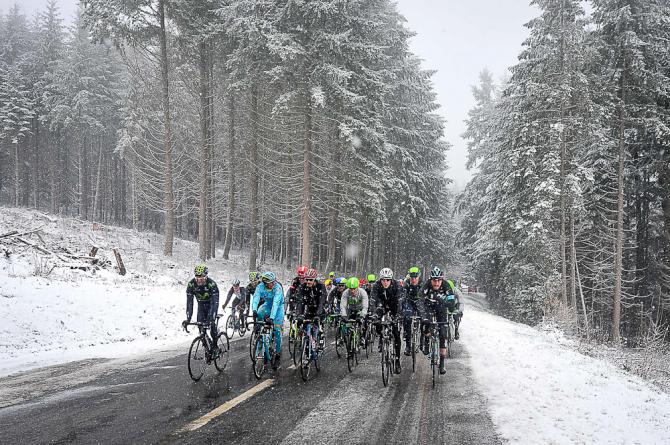
Pre-event massage immediately before an event, has been shown to reduce explosive power and speed. Hence most pre-event rubs tend to be more for the superficial application of oils or creams, especially in adverse weather conditions e.g. cold, rain, snow etc.

Image: http://www.cyclingnews.com/news/extreme-weather-protocol-misses-the-mark-in-paris-nice/

Why is it difficult to conduct research into massage?

The reasons are many and varied. As mentioned previously, each rider is different, their exercise and race protocols are different, techniques vary and their application is differs from practitioner to practitioner. Not to mention, the difficulties of setting up a sham control group. Most studies into the effect of massage have been small, in both numbers and effect sizes (see here) and compare to other dissimilar interventions. 

Physiological effects?

Emerging research (reported here) into physiological effects, is partially encouraging. Some studies have (apparently) shown support for the contention that 'massage attenuates the inflammatory response to exercise, as well as decreases pain, muscle tone and hyperactivity'. This research suggests that reductions in inflammatory cells and proinflammatory cytokines via massage may 'mitigate secondary injury associated with intense exercise, thereby reducing tissue damage and accelerating recovery'. This all sounds almost too good to be true, and readers should note that this particular small study has been comprehensively pulled apart by various commentators (here & here). Furthermore, a meta analysis in 2016 suggested that the effects on 'performance recovery are rather small and partly unclear'. However, a later systematic review with meta analysis in 2017 stated that 'current evidence suggests that massage therapy after strenuous exercise could be effective for alleviating DOMS and improving muscle performance'. 


To summarise, it seems that as things stand ... NO ONE IS QUITE SURE!


It has been quite rightly proposed that ‘future studies should attempt to use standardised protocols so that between-study comparisons in which only varied single variables, such as timing and dose of massage, can be examined’. This of course works perfectly well in Science, but is entirely non-contextual for the sport, or the individual involved in that sport.

So what about the psychological effects of massage?

Massage (mainly in small underpowered studies) has been reported to have significant psychological benefits, including increased relaxation and decreased expression of stress biomarkers (i.e. cortisol). However, the effects of therapeutic touch are a key area for further research and this comes in the light of recent research (here) suggesting that skin is thought to play a key role in the regulation of blood pressure. This may in part, provide a physiological explanation for the commonly reported relaxation and wellbeing commonly reported.


So what is the bottom line?

Well frankly, the jury remains out from a scientific perspective, especially with regard to the physiological effects of massage. The effects of multiple bouts of massage, either daily or at regular intervals over the course of the Grand Tours, has yet to be investigated.  Despite this, the suggestion remains that massage, to quote the BMJ 2017, remains 'an area worthy of (further) investigation, as we continue to advance the science for these therapies'.  

2021 Update

The publication of a research paper in 2021 causes quite a stir in massage and Physiotherapy circles as the following headline started to do the rounds in prominent newspapers such as The Times and the the Harvard Gazette


What lay beneath the headlines was the that the study published in Science Translational Medicine was carried out on mice using a custom-designed robotic system to deliver consistent and tunable compressive forces to the mice’s leg muscles. The findings that were reported as suggesting that the "mechanical loading (ML) rapidly clears immune cells called neutrophils out of severely injured muscle tissue. This process also removed inflammatory cytokines released by neutrophils from the muscles, enhancing the process of muscle fibre regeneration".

Unsurprisingly, this development caused quite a stir among the hands off protagonists and opinion shapers, who naturally focused on the fact that the study was carried out on rodents, which is a fair starting point for critique, and one I would use myself. However somewhat curious, I decided to explore if any mice studies had ever translated into anything meaningful for humans ... the findings were perhaps a little eye opening. An article entitled 'Animal Testing and Research Achievements' was more revealing than I had anticipated. The article offers a list of conditions from cancer to mental health conditions (with everything in between), a random click on a condition of interest soon reveals that mice studies have been hugely influential on an impressive range of conditions leading to 'life-saving and life-improving breakthroughs'. I have to say, I'd not realised the actual research impact of animal studies until I was prompted to take a look at the background literature. 

That said, the mice massage study has not yet been translated into humans, so whilst the headlines may shout loudly, and massage protagonists, researchers may hail this as a break through, there is still a way to go. Meanwhile ... 'the team is continuing to investigate this line of research with multiple projects in the lab. They plan to validate this mechanotherpeutic approach in larger animals, with the goal of being able to test its efficacy on humans. They also hope to test it on different types of injuries, age-related muscle loss, and muscle performance enhancement'. All I would personally say, is watch this space for further developments and keep an open mind.

In the mean time, practitioners may be wise to avoid extravagant claims for what they are doing.

If however, we consider the psycho-social benefits of massage, there is perhaps an argument for its continued use. What is particularly interesting, is that whilst many pro cycling teams, have radically altered training programmes, diet and resting regimes for their athletes in response to emerging science, none have so far considered it prudent to remove or alter massage as an active ingredient of rider preparation.Whether this is down to science, tradition or a fear of rider rebellion, remains another unknown.

Massage, as suggested in Part 1 of this blog, may indeed be the ultimate biopsychosocial intervention, for there are (some) biological, psychological and social reasons for its continuation in the context of professional sport … and that truly is food for thought in an ever changing world. What is clear, is that there remains a demand for massage in sport (and other areas of health provision). Massage will continue to be delivered by those with the necessary skills, and whether ANY therapists believe themselves above and beyond that ... is frankly, entirely up to them ... and their interpretation the science, ethics, psychology and socio-economics of the topic.
 

That massage as a therapy, has stood the test of time is indeed an interesting sociological observation ... and perhaps nothing more.


Massage in cycling - perhaps the most biopsychosocial of interventions


Image: https://semiprocycling.com/everything-a-cyclist-should-know-about-massage

Finally a word of advice. 

It is worth reminding yourself that the role of team masseur/soigneur is one of the most demanding of jobs, both physically and psychologically. Having experienced both, first as a pro-cyclist and secondly a team soigneur … I can tell you for sure, personally, I would rather ride the race, and that is why my tenure in the job (as a soigneur) was very short lived. The final straw for me, was actually the 8 hours I spent bobbing up and down in a tiny fishing boat on the English Channel, trailing in the wake of a swimmer in the London-Paris Triathlon. BUT don’t let that put you off, it is also an incredibly rewarding role …but it is no ordinary job AND believe me, you’ll earn every last penny!

Author: Alan J Taylor is a writer and critic who thinks about stuff and works as a Physiotherapist, University Assistant Professor and Medico-Legal expert witness ... The views contained in this blog are his own and are not linked to any organisation or institution. Like Bukowski, he 'writes to stay sane'. He once rode the Tour of Britain and worked as a cycling soigneur.

Copyright Altered Haemodynamics © 2017 All Rights Reserved


Thursday, 13 July 2017

Massage: Confessions of an ex-pro cyclist (Part I)


Photo: Soigneur http://www.cyclist.co.uk/in-depth/683/soigneur-diaries

With the 2017 Tour De France in full swing, it may come as a surprise to many, that every team will employ 4 or more masseurs (known in France as Soigneurs) and virtually every rider in the race will take sports massage as part of their daily routine. I’ve seen a great deal written on the topic of massage over the years (here, here), not all of it complimentary (forgive the unintended pun). So, rather than discuss the topic from the perspective of a physiotherapist, I’m going to make my observations on the topic from the recipient or service user, in this case, the rider. I’ll try to explain what compels Tour de France riders’ to take sports massage at the end of each stage, despite what the science may suggest. 

Why? I hear you ask … well partly, because (in what seems now, like another lifetime) I spent a number of years as both an amateur and professional cyclist and have more than a few tales to tell. I rode and survived 2 Tours of Ireland, 1 Tour of Flanders, 1 Professional Tour of Britain, and a host of other single day and stage races, during a long and occasionally successful career in the UK and on the continent. So, in essence, I have felt the pain and suffering of elite level sport, and spent more than my fair share of ‘time on the table’ under the hands of some of the finest masseurs/masseuses in the business.  

By way of illustration, allow me tell you a story that remains most vivid in my mind, relating to massage … it was the 243km 5th Stage of the 1988 Kellogg’s Tour of Britain, from Birmingham to Bristol. Unusually for a long stage, the race started from the gun and the peloton (big group of cyclists) was soon strung out in a line as the pace shot up to 28 mph +. We were in for a long day of toil, because not only was the pace high (and we had 4 days in our legs already), but then the rains came down, and the hills around Cheddar Gorge loomed ominously ahead. 

Photo:https://quotefancy.com/quote/1640043/Fausto-Coppi-Cycling-is-suffering
As the race splintered, I soon found myself in a group of non-climbers and we clubbed together to form what is commonly known in the sport as the ‘Laughing Group’ or autobus. That is, a collection of riders who ride together to make it to the finish inside the time limit for the race (a rider has to finish within a set percentage of the time of the stage winner, and the limit is pre-set by the race directors). The laughing group has a leader who calculates the timings and ensures the group tries hard enough to get to the finish just in time so that riders do not get eliminated (thrown off) the race. To do that, we all had to take our turn at the front, chain gang style, and I still recall today the pain in my legs as the cold rain drenched us, the grit blackened our faces, and the hills sapped at our strength and morale. The captain had done his job well and we limped in with 3 minutes to spare. I rode straight to the team hotel where I dropped my filthy bike with the mechanic. I wearily made my way to my room, where I quickly showered and lay on the bed in a fitful sleep, still shivering from the cold and the effort.
Photo: http://www.sportfortelevision.com/tour-of-britain-prutour/
I don’t recall how much time had passed, but I was awoken from my fitful slumber by the room telephone, it was the team masseur. “Hey Al, you’re next on the table” he announced, with his usual enthusiasm. All my body wanted to do was sleep, I could think of nothing else. “Erm, I think I’ll give it a miss today, I think I’m just gonna sleep this off”, I said, rubbing the grit from my eyes. “No no … you’d better come down, the guys said you looked a bit pale when you came into the hotel, we’d best take a look at you, come on down now, I’m just two floors below”. “OK” I said weakly, unable to fight my corner, “Ok, I’ll be down in 5 minutes”. As I rose from the bed, I felt like I’d left my body and soul somewhere on the road between Birmingham and Bristol and my legs by this time, were aching more than I’d previously recalled, ever before in my career, I felt broken and drained. Despite this, I called on my last ounce of resilience and took the stairs down to the masseur’s room. It was a peculiar masochistic tendency of mine, just to see how good or bad my legs felt … they felt BAD, and I limped onto the massage table, already dreading the next day.

Photo: Kelly and Roche back in the old days. https://www.mamnick.com/blogs/journal/8823043-homeroads
Without batting an eyelid, the masseur said, “Tough day Al?” I settled onto the table and wearily began to purge myself of the story of my terrible day. I explained nervously, that he’d need to take it easy, because my legs were caning me from the efforts of the last 4 days, the rain, the cold, not to mention the distance. “I know … I can feel it”, he said confidently. Already a qualified physiotherapist by this time, I guessed knowingly, that he couldn’t really … he was just saying that, to make me feel better. However, I sensed that he’d started his work with a much lighter touch, and gradually he worked away at the thighs and calves, focusing on the sore spots that he found, with his skilled hands and fingers. 

After a short while he broke the silence, once he knew that I had relaxed into the session, “Big day tomorrow Al?” he said. “What do you mean” I asked, suddenly jolted back into reality. “Westminster circuit race”, he announced with a jaunty grin. “Oh” I said, suddenly recalling that we had a 100km race in the City of London barely 15 hours away. “It’s your big day isn’t it? Your chance to get up there with the big boys?” he announced confidently. Referring to the fact that flat circuit races like that were meant to be my specialty. “Oh” I said doubtfully. “Not with these legs”. “We’ll soon have you ship shape” he replied confidently, as the kidology continued and he kneaded and wrung my aching muscles. I sensed that he spent a little extra time on my legs that evening, as he worked hard to return the ‘souplesse’ (French word for flexibility and suppleness) into those tired muscles, and I could feel the pain ebbing away. As he worked, he talked, and we discussed how the next day would go, how I would find the strength and ability to play my part in the race with some of the World’s greatest riders (Sean Kelly, Stephen Roche etc.). Finally he said “Were all done, Al” … “Go and get some food, now the colour has returned to your face”. I rose gingerly from the massage table after 30+ minutes, truly feeling like another man.

'The pain in my legs had ebbed away, I was no longer broken … in fact I was looking forward to tomorrow, the finale in London, I was going to the capital city to finish my first Tour of Britain, and I was going to make it count.'


The physio within me was not to be fooled though, I did the ‘stair test’ on the way down to dinner, and sure enough, I could go down the steps two at a time, in fact I literally skipped the last two (bravado, I know). As I did so, I spied Sean Kelly sitting (looking a little perplexed, at my little leap), at a nearby table, quietly finishing his dinner with his team mates. I gave him a little wink as a strolled confidently past his table … I said (secretly to myself) “see you tomorrow big fella”.

The next day went like a dream, we took the coach transfer to London, and I felt like I was floating on air, yesterday’s ‘laughing group’ legs were gone, and I took my place on the start line feeling strong and confident. I truly did ‘mix it with the big boys’ that day. The 100km Westminster stage was won by the classy Dutchman Jacques Hanegraaf, and Mr Kelly, well he came second, perhaps because I’d made his legs hurt with my hard turns on the front of the race (ha, ha … that’s my story and I’m sticking to it). I finished that stage in the top 20 (my only top 20 placing in the whole race), for me it was a minor victory. As we sailed over the finish line I was close enough to Kelly to give him a little ‘frotter’ (French, to rub or chafe … riders use this technique to move through the peloton), he laughed this time, and gave me a friendly pat on the back as we coasted along on the momentum of the final sprint, our day’s work done. 
Photo: Sean Kelly http://www.seankellyclassic.com/

The masseur was the first to come over and congratulate me, “You rode like the wind Al” he said with a massive grin. I was high on the adrenaline of finishing my first big pro Tour in such exalted company. I said simply, “Well, if it wasn’t for you … I would never have made the start line today … end of!” He laughed out loud, saying nothing at all. I shook his hand as hard as I could, knowing what his eyes were saying … he was just doing his job.
So what does this story tell us, I hear you ask? Well it’s a simple story of a lived experience of massage from the perspective of a sportsperson, which I felt worth sharing. I wanted to share it because it illustrates what an incredibly powerful tool, massage and ‘time on the table’ is for the competitive athlete. 

The therapeutic alliance between the athlete and the masseur/masseuse during that 30-40 minutes is thought by many riders to be as valuable as training and sleep in the preparation for competition.


The naysayers and the sceptics will of course insist that my experience (and those of all of the TDF riders) was/is either a one off or, entirely down to pre-conceived expectations and/or the theatre of placebo. To those, I would say that the experience of immediate post race pain relief, together with improved mood, occurred time and time again under of the hands of good massage therapists AND if it was placebo … frankly as a sportsperson, truly I didn’t/don’t care.

As a therapist you should milk it, because if it means the difference between your athlete being able to compete at their best the next day (or not), then get comfortable with that.

Retro Jerseys FOR SALE!
For those who suggest that as an athlete, I should have built my resilience and not be reliant on passive modalities (such as massage), I would politely explain, that the half hour on the massage table is where I was able to cast off my demons, talk trough the tough times, plan my tactics for the next day, work on my kidology and actually develop my focus, my social support and therefore DEVELOP my resilience. Massage uniquely combines the power of touch with individualised sports psychology, there is no time during a competition where the athlete feel so at peace, yet strangely empowered and motivated, than on that massage table. 

My advice to therapists who wish to work in elite sport, is this:

Understand that there is a demand for massage within elite sport

Learn and understand the power of 'time on the table' 

Learn and practice the skills of soft tissue massage

Decide for yourself whether knots and sore spots exist in athletes muscles

Know your athletes inside out

Know the sport inside out (including the tactics and kidology involved)

Understand and accept that your 'time on the table' intervention may have a strong element of placebo

Combine all those skills and knowledge and APPLY judiciously


Put simply, there remains a strong demand for sports massage at the top level of sport. It is an intervention that just might make the difference between the starters and the non-starters, the winners and the losers. 
         

BUT it is worth remembering … this therapeutic intervention is as much about what you say, as what you do. Think of it not JUST as massage but rather ‘time on the table’, a vital blend of therapeutic touch and sport psychology, dare I say it … a truly biopsychosocial intervention ... where the physical, the psychological and the emotional are all considered equally in a holistic ritual.

Photo: http://www.azquotes.com/quote/1062462
Finally, I’ll just remind those sniffy cynics and sceptics out there, that this article was written anecdotally from the perspective of the service user (in this case, the rider) and is simply a description of one single experience (of many), which attempts to explain why elite athletes have such a long standing and passionate affinity with sports massage, and as such, it is not a scientific treatise.
Racing in France taught me a great deal, not least an admiration of the beauty of the French language. So, as this article has been peppered throughout, with French cycling terminology, allow me to take this opportunity to regale you of my favourite French expression of all …

“Jamais, péter plus haut que son cul.” 

I'll leave the translation, this time ... to you!  

Sound advice for anyone, methinks.

Part II of this blog, will discuss massage from the perspective of the race Soigneur/Therapist and will consider the science behind the intervention … and THAT may reveal a different story completely?

Author: Alan J Taylor is a writer and critic who thinks about stuff and works as a Physiotherapist, University Assistant Professor and Medico-Legal expert witness ... The views contained in this blog are his own and are not linked to any organisation or institution. Like Bukowski, he 'writes to stay sane'.