Showing posts with label sociology. Show all posts

Thursday, 8 November 2018

Who's harming who?: Was Roger Kerry right ... will Physiotherapy eat itself?

Following directly on from Blog I. The case of the 'sprained ankle': A reflection on the narrative of ‘harm’. 

Blog II: 

Who's harming who?: Was Roger Kerry right ... will Physiotherapy eat itself? ... looks at the implications of the the ongoing discussion around 'harm' for the physiotherapy profession and considers how the profession can and needs to move forward.

When I perused again, Roger Kerry's must read 'Physio will eat itself' I was struck once again by this erudite paragraph ...


The recent lively debate surrounding the current narrative of 'harm' has perhaps made Roger's words echo louder in some quarters. 'Harm' has a range of definitions and thus, may be interpreted in a number of ways. 

The definition below, is one that I am often sent and it is perhaps a helpful starting point.


If we are to maintain our stance as a science based profession then data, the interpretation of data and the public messages we convey are important. When I asked Australian physiotherapists and 'leading authorities on back pain' Chris Maher and James McAuley, for their 'harm' definition and supportive data for the recent Sydney Morning Herald article they seemed unable to supply it. That article not only suggested that ergonomic interventions (which I have no intellectual or other investment in) were harmful, but also 'dangerous'. All of this was suggested without ANY supportive data and was a clear example of the manipulation of language. It seems perhaps, that the article in question may have strayed into murky waters of 'opinion based medicine'. Either way, lets be absolutely transparent ... if ergonomic interventions are ACTUALLY 'harmful ' or 'dangerous', surely there should be an immediate call for them to be risk assessed and controlled? 'Harm' is after all, something we should take VERY seriously and that is precisely why we need data.   

Bold statements require bold data, and leading experts should be able to provide that ... OR expect their statements to be questioned.

Interestingly ... Maher blocked me on Twitter for asking for his harm data. That can of course, be interpreted that any way you wish. 

It is worth reflecting that the opposite of harmed is (some would argue) helped. Imagine for a moment, if someone, a therapist or a representative of the the ergonomics industry, had presented a series of patient narratives to say that (say) ergonomics had 'helped' them. No one would be able to deny those patient narratives, after all, they are what the patient thinks, believes and reports ... But now tell me that there wouldn't be a rush to the science and the RCT data to suggest that despite what those patients' believe, there is no strong scientific support for what they described or said, and that all they had to support their statements were associative argument and belief. Indeed, if that was a company trying to sell a product, then they would quite likely be accused of at best, 'opinion based medicine' or at worst ... snake oil salesmanship.

A sociological perspective
The manipulation of language (Unspeak) is a common psychosociological phenomenon and a tactic commonly used by politicians who wish, by creating fear and silencing opposing views, to push through specific agendas. The uncertainty and misinformation which surrounds 'Brexit' springs to mind, and Donald Trump's demonisation of immigrants as rapists, drug runners and (more recently) cop-killers is a further example. This constant media stream affects the macrocosm of everyone's life, and is perhaps one of the factors which wears down an individuals resistance to language manipulation, when it enters the microcosm of their everyday work in physiotherapy.

So if we get back on track and consider physiotherapy treatments or management options.

If a treatment or advice is not efficacious … say so (use RCT evidence). 

If it is uneconomical or costly … say so (use health economics evidence).

If it is 'harmful'  ... provide definition a measure and some data, any data. 

If it is 'dangerous' ... provide data and a proposed risk assessment strategy, root cause analysis or both. 

Above all ... use plain English, with clear and agreed definitions.

Consider for a moment the commonly used Physiotherapy mantra 'Hurt does not always equal harm'  ... then ponder that, in virtually the same breath, we hear the promotion of the idea that X, Y or Z treatment or advice is 'harmful' to the patient, on the back of associative argument only, or in other words, without any supportive data. 

Take heavy school bags and LBP as another example. Contemporary science has suggested that carrying heavy school bags does not appear to be associated with LBP in school children. So with that knowledge, we can now de-threaten the 'heavy school bag' as non-harmful, and re-assure children and parents that they are less likely to be factor contributing to to their present or future LBP. 

But here is the key question ... is the next stage of this process, to go on to say that any practitioner or therapist or newspaper article that offers a contrary option (to the currently fashionable or in vogue ones), is causing 'harm' to patients? As things stand, it could be suggested perhaps ... that they have not kept up do date with the science, that they are  offering advice which is contrary to current thinking, that they may be instrumental to a delay to appropriate management ... but 'harm' or 'harmers'? That would be more much challenging to effectively demonstrate. 

The recently published LBP study suggesting that pain neuroscience education (PNE) appears to be no more effective than placebo, raises some interesting questions with regard to the time, energy and belief invested into that particular modality. Would the next step be to suggest that PNE was harmful? I personally don't think so. BUT ... that is precisely why we need to be more consistent with our word usage as a profession in EVERY respect, and that means with our patients, with each other and with our press releases and SoMe statements. 

These BLOGS, and my Twitter commentary are NOT a defence of passive treatments, inappropriate or outdated advice or anything else really, who would want to defend those things? It is a request for transparency, scientific consistency and an honest dialogue. The recent BJSM (peer reviewed) editorial entitled, 'Evidence based physiotherapy needs evidence based marketing' ... is a salient example of where that scientific consistency has gone sadly astray. We have publicly challenged the authors of this editorial, to provide the harm data on the specific physiotherapy interventions named, OR withdraw their claim on the basis that it is not supported by their Utopian ideal of ‘rock solid research data’. 

Their lack of tangible and credible response (to date) from the authors to that challenge, has been disappointing to say the least. Once again, the reader can make their own judgement on that. 

Amongst and perhaps despite all of this, there is an increasing awareness of the need for a move toward self management options for MSK conditions. It is apparent that we DO have some qualitative data to support the contention that ideas and beliefs (which may be influenced by practitioners choice of words/descriptions) may lead to confusion and uncertainty (amongst patients), leading to negative impacts on activity participation, health behaviours and self-management decisions in knee osteoarthritis.

It would be hopeful to imagine that the best, the most efficacious treatments and communication methods would eventually make their way to the top of the pile without a war of words and obfuscation. The caveat to that though, is that there will always be innovators, early, late adopters and laggards ... that links directly to the diffusion of innovations. Perhaps this is a source of ongoing frustration amongst innovators and early adopters who wish to push for rapid change, but is that a strong rationale for open ridicule? Is that a sound tactic that will facilitate or hasten change? I suspect that they are also difficult questions to answer with any accuracy.


The real world implications of the narrative of 'harm'
There is an important and logical corollary of the ongoing 'harm' narrative to consider and think carefully through. That is, IF the profession collectively buys into the narrative of harm ... and harm ACTUALLY is taking place, then two things may follow logically from there.

1. If it truly IS the case, that some physiotherapists are somehow, 'harming' patients. Then that is a serious allegation with serious implications for the profession.

Questions are immediately raised.

What is the harm? 
How is this harm taking place? 
Where is the line drawn? 
Who are the harmers? 
... and how should the harm be risk assessed, with a view to harm limitation

Those questions would have massive implications for the governing bodies of Physiotherapy the World over. It would require clear definitions, it would require the collection of accurate data followed by root cause analysis (which has its limitations too), risk assessment and action plans put in place to limit or reduce further risk to patients (if that risk REALLY exists). 

2. If there is TRULY is data to to support the narrative of harm, then it is likely that law suits would follow. 

Law suits often develop from a patient or their relatives interpretation of what they see/hear in the news or on social media. So if a patient were able to claim that they were harmed by the mismanagement of their case AND could evidence that, AND were inclined towards blame, then it is quite feasible that a law suit could follow. If that happened then medico-legal expert witnesses would be called in on either side,  to look at the evidence pertaining to the individual case and the profession. That of course, would require the measures applied to the 'harm', which would be considered with the science around the efficacy (or otherwise) of and risk of treatments. These things happen in other professions and are clearly documented.

So the questions remain ... 

Are some physiotherapy treatments (or how they are delivered) REALLY 'harming' patients?

If so ... how are we capturing that data, and what are we doing to risk assess and prevent future 'harm'?


OK, so "how can we move forward?". I hear you ask. 

Recently I watched a video of how things can be done effectively without the need to demonise, shout down opposing views or appear to leave just one solution to a problem ... if you've not seen it you should. Irish Physiotherapist Kieran O' Sullivan calmly discusses LBP, strategies for recovery and the state of the knowledge (to date) in the area, in a most convincing performance. By re-conceptualising what we consider as 'safe' or 'dangerous' physical activities, Kieran says in 45 minutes, far more than months of convoluted 'discussion' on Twitter has achieved on the topic of evidence and word usage in the last year. He does so in a calm, reassuring and humble tone, exposing his own fallibility ... which to me is far more convincing than any shouting match, and a great example of how things can be done in a more constructive way. There are countless more examples out there too ... of skilled evidence based therapists who are doing the very best to navigate an increasingly hostile environment with care, empathy, positivity, cohesion and a range of solutions to the increasingly complex health problems that we encounter.


We can also take a tip from the discipline of psychology, who appear able to both define and measure harm very  effectively and very scientifically. The recording of adverse events from psychological treatments in clinical trials: evidence from a review of NIHR-funded trials. There are many more examples in dietetics, medicine, drug trials etc. Physiotherapy needs to step up to the science OR lose the narrative ... until it (harm) can be effectively defined and measured.


From: The recording of adverse events from psychological treatments in clinical trials: evidence from a review of NIHR-funded trials

I share the obvious frustration of many with the slow pace of change, and I suspect (without a shred of evidence) that this is why the narrative of harm has developed. It is worth reflecting that harm, due to its multiple definitions and interpretations, can range from multiple deaths (war) to taking offence ('I felt harmed by your views') and everything in between. In a world where we are seeing increasing mental health problems often linked to self-harming and suicide, it is clear that we are in very emotive territory. No decent ethical therapist would want to harm or mislead their patients, but as science and knowledge moves on, if they are clinging on to outdated knowledge and ineffective methods (as supported by science, rather than opinion) ... should they be classified, demonised or even mocked as harmers? 


OR ... is there a different way to approach this? Is there a middle ground? 

I truly do not know the answer, but it is a question which we as a profession, should not shy away from as the profession attempts to nurture and develop 'good clinicians'.


There IS common ground fortunately, and it is hopeful that many are agreed that there is a need to change the approach to MSK care. This means being more honest with the level and type of care we can and should currently offer, and the outcomes that may be achieved, as highlighted by (Lewis & O’Sullivan BJSM, 2018). It also means being honest with our interpretation of the science and evidence. Scaremongering claims by researchers, academics, clinicians or social media commentators that one treatment or advice or another is harming patients is, in the absence of evidence (of widespread measurable harm), wilfully misleading to patients, therapists and the general public alike and frankly, amounts to 'fake news'.

For the profession to move forward, it requires a radical change of mind set which aligns with the current challenging health care climate. It is a global challenge that is well recognised and which Physiotherapists the World over can rise to … IF and perhaps only if, collectively the profession can bring itself to end the self-perpetuated, conflicts and phoney, self created divisions which evolve from the unnecessary narrative of 'harm'.

For anyone with even the slightest interest in the sociology of conflict ... this article makes a fascinating read and illustrates that in the tiny microcosm of MSK physiotherapy, we really don't need another war. 

Otherwise, Roger Kerry may well prove to be a prophet ... and that really WOULD be a thing. 


HT this time, goes to colleague and regular sounding board Roger Kerry, for his regular thought provoking musings on the psycho-sociology of the physiotherapy profession.

Author: Alan J Taylor is a writer and critic who tries to think about stuff . He works as a PhysiotherapistUniversity Assistant Professor and Medico-Legal expert witness whilst maintaining a small clinical work load. The views contained in this blog are his own and are not linked to any organisation or institution.  He once rode the Tour of Britain and worked as a cycling soigneur. He still enjoys riding a bicyle through the leafy lanes of Nottinghamshire and Derbyshire. In a World full of conflict and division ... like Bukowski, he 'writes to stay sane'.


Wednesday, 1 November 2017

Massage: Confessions of a cycling soigneur .... (Part II)

This year the cycling Tour of Britain went right past my house. The rather eerie coincidence of the 175km Stage from Mansfield to Newark passing so close to home, has not passed me by (I wrote about a similar 175km stage in - ‘Massage: Confessions of an ex-pro cyclist – Part 1’).

In the follow up to Part I, I take a look at the role of the soigneur in professional cycling and consider the science behind the art. For those perhaps unfamiliar with the term, it is French for a caretaker or carer, literally a person who gives massage, and other assistance to a team, during a cycle race. My experience as a soigneur in cycling was short and sweet (I’ll explain why at the end of this blog) with stints on the Tour of Guadeloupe, Rapport Tour in South Africa,  and a follow up on the London-Paris Triathlon.


Tour of Britain


The job is much more challenging than many would appreciate and involves considerably more than massage. In short, the soigneurs are generally the first to rise and last to go to bed, though team mechanics (on rainy days) may dispute this. The key requirements for the role are organisation, stamina and an understanding of the sport. John Herety, Team Director at JLT Condor said, “It’s a long day, they work from very early in the morning to last thing at night. It looks glamorous from the outside, but it’s a hard, hard job.” He went on to explain that in the UK, the term ‘Carer’ is used more commonly since the dark days of the Festina drug scandal in 1998 when Willy Voet, the Festina Pro team soigneur was stopped by the police. In his car were the drugs the team needed if they were to have any chance of playing a competitive part in that year’s Tour de France. The story was told in Voet’s subsequent book ‘Breaking The Chain: Drugs and cycling, the true story.’

Nowadays, post-Armstrong, the sport appears to have cleaned up its act. Soigneurs still play a vital part in every team’s preparation, especially in the stage races (races that last more than 1 day) like the Grande Tours of France, Italy and Spain. The role involves everything from, driving to and from airports, shopping for provisions (nutritional needs of the riders), to making up bottles and feed bags, pinning on numbers, pre-race massage, handing up feed bags, through to post-race massage and even in some cases, washing/mending riders clothes … not to mention, acting as the riders confidant … this is no ordinary job.

So what is the role of the massage I hear you ask? Well, riders will make their way to the massage table in dribs and drabs, depending on the day’s events such as stage wins, crashes, visits to doping control, TV/Radio interviews etc. Then they will spend between 30-45 minutes on the table, receiving a full body massage with a bias towards the legs. Those legs of course, will have been pumping at 90-120 revolutions per minute for anything between 4 and 6+ hours (day after day) in the big Tours. Each team will have 3-4 soigneurs who share the volume of work. Most riders avail themselves to the skills of the soigneur, BUT there are a few notable exceptions. It is said that Chris Boardman former yellow jersey holder and Tour de France stage winner, was not a big fan of massage, but would occasionally take to the massage table to appease the GAN soigneur at the time.

Massage: A social interaction. Photo via https://derotsmedia.com/2012/03/22/5-april-holland-sport-special-parijs-roubaix/


So what of the science?

Much has been written on the topic and massage as a 'therapy' has its fair share of critics and advocates (see here). It is fair to say that the evidence for its use is far from conclusive. In cycling, massage has always been a traditional form of preparation for the big Tours and major events by riders, coaches and team managers alike. So much so, that from a socio-economic perspective, professional teams will happily employ 3 or 4 soigneurs for the duration of the Grand Tours and major events throughout a season. Whilst some riders retain personal soigneurs.

So let’s consider a few questions: 

Is massage always the same?

No. There are a plethora of different styles and applications, ranging from Swedish massage’ hands on to mechanical methods using foam rollers and devices/tools. This naturally makes reproducibility and research into massage very challenging. The most commonly used types of massage in cycling are hands on, Swedish style applications, but the exact method and style may be down to an individual’s preference.

Is massage always appropriate?


Short answer ... NO.

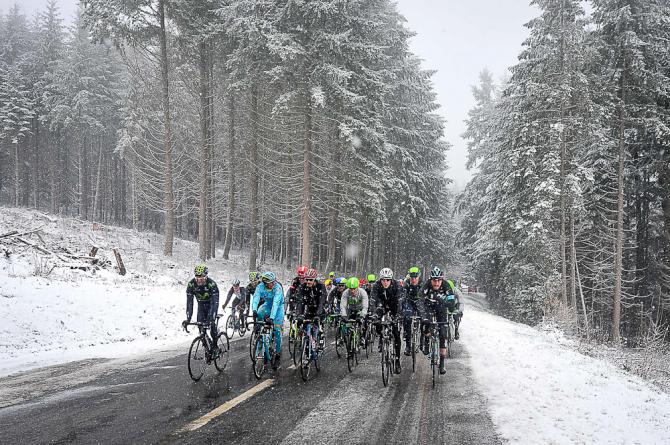
Pre-event massage immediately before an event, has been shown to reduce explosive power and speed. Hence most pre-event rubs tend to be more for the superficial application of oils or creams, especially in adverse weather conditions e.g. cold, rain, snow etc.

Image: http://www.cyclingnews.com/news/extreme-weather-protocol-misses-the-mark-in-paris-nice/

Why is it difficult to conduct research into massage?

The reasons are many and varied. As mentioned previously, each rider is different, their exercise and race protocols are different, techniques vary and their application is differs from practitioner to practitioner. Not to mention, the difficulties of setting up a sham control group. Most studies into the effect of massage have been small, in both numbers and effect sizes (see here) and compare to other dissimilar interventions. 

Physiological effects?

Emerging research (reported here) into physiological effects, is partially encouraging. Some studies have (apparently) shown support for the contention that 'massage attenuates the inflammatory response to exercise, as well as decreases pain, muscle tone and hyperactivity'. This research suggests that reductions in inflammatory cells and proinflammatory cytokines via massage may 'mitigate secondary injury associated with intense exercise, thereby reducing tissue damage and accelerating recovery'. This all sounds almost too good to be true, and readers should note that this particular small study has been comprehensively pulled apart by various commentators (here & here). Furthermore, a meta analysis in 2016 suggested that the effects on 'performance recovery are rather small and partly unclear'. However, a later systematic review with meta analysis in 2017 stated that 'current evidence suggests that massage therapy after strenuous exercise could be effective for alleviating DOMS and improving muscle performance'. 


To summarise, it seems that as things stand ... NO ONE IS QUITE SURE!


It has been quite rightly proposed that ‘future studies should attempt to use standardised protocols so that between-study comparisons in which only varied single variables, such as timing and dose of massage, can be examined’. This of course works perfectly well in Science, but is entirely non-contextual for the sport, or the individual involved in that sport.

So what about the psychological effects of massage?

Massage (mainly in small underpowered studies) has been reported to have significant psychological benefits, including increased relaxation and decreased expression of stress biomarkers (i.e. cortisol). However, the effects of therapeutic touch are a key area for further research and this comes in the light of recent research (here) suggesting that skin is thought to play a key role in the regulation of blood pressure. This may in part, provide a physiological explanation for the commonly reported relaxation and wellbeing commonly reported.


So what is the bottom line?

Well frankly, the jury remains out from a scientific perspective, especially with regard to the physiological effects of massage. The effects of multiple bouts of massage, either daily or at regular intervals over the course of the Grand Tours, has yet to be investigated.  Despite this, the suggestion remains that massage, to quote the BMJ 2017, remains 'an area worthy of (further) investigation, as we continue to advance the science for these therapies'.  

2021 Update

The publication of a research paper in 2021 causes quite a stir in massage and Physiotherapy circles as the following headline started to do the rounds in prominent newspapers such as The Times and the the Harvard Gazette


What lay beneath the headlines was the that the study published in Science Translational Medicine was carried out on mice using a custom-designed robotic system to deliver consistent and tunable compressive forces to the mice’s leg muscles. The findings that were reported as suggesting that the "mechanical loading (ML) rapidly clears immune cells called neutrophils out of severely injured muscle tissue. This process also removed inflammatory cytokines released by neutrophils from the muscles, enhancing the process of muscle fibre regeneration".

Unsurprisingly, this development caused quite a stir among the hands off protagonists and opinion shapers, who naturally focused on the fact that the study was carried out on rodents, which is a fair starting point for critique, and one I would use myself. However somewhat curious, I decided to explore if any mice studies had ever translated into anything meaningful for humans ... the findings were perhaps a little eye opening. An article entitled 'Animal Testing and Research Achievements' was more revealing than I had anticipated. The article offers a list of conditions from cancer to mental health conditions (with everything in between), a random click on a condition of interest soon reveals that mice studies have been hugely influential on an impressive range of conditions leading to 'life-saving and life-improving breakthroughs'. I have to say, I'd not realised the actual research impact of animal studies until I was prompted to take a look at the background literature. 

That said, the mice massage study has not yet been translated into humans, so whilst the headlines may shout loudly, and massage protagonists, researchers may hail this as a break through, there is still a way to go. Meanwhile ... 'the team is continuing to investigate this line of research with multiple projects in the lab. They plan to validate this mechanotherpeutic approach in larger animals, with the goal of being able to test its efficacy on humans. They also hope to test it on different types of injuries, age-related muscle loss, and muscle performance enhancement'. All I would personally say, is watch this space for further developments and keep an open mind.

In the mean time, practitioners may be wise to avoid extravagant claims for what they are doing.

If however, we consider the psycho-social benefits of massage, there is perhaps an argument for its continued use. What is particularly interesting, is that whilst many pro cycling teams, have radically altered training programmes, diet and resting regimes for their athletes in response to emerging science, none have so far considered it prudent to remove or alter massage as an active ingredient of rider preparation.Whether this is down to science, tradition or a fear of rider rebellion, remains another unknown.

Massage, as suggested in Part 1 of this blog, may indeed be the ultimate biopsychosocial intervention, for there are (some) biological, psychological and social reasons for its continuation in the context of professional sport … and that truly is food for thought in an ever changing world. What is clear, is that there remains a demand for massage in sport (and other areas of health provision). Massage will continue to be delivered by those with the necessary skills, and whether ANY therapists believe themselves above and beyond that ... is frankly, entirely up to them ... and their interpretation the science, ethics, psychology and socio-economics of the topic.
 

That massage as a therapy, has stood the test of time is indeed an interesting sociological observation ... and perhaps nothing more.


Massage in cycling - perhaps the most biopsychosocial of interventions


Image: https://semiprocycling.com/everything-a-cyclist-should-know-about-massage

Finally a word of advice. 

It is worth reminding yourself that the role of team masseur/soigneur is one of the most demanding of jobs, both physically and psychologically. Having experienced both, first as a pro-cyclist and secondly a team soigneur … I can tell you for sure, personally, I would rather ride the race, and that is why my tenure in the job (as a soigneur) was very short lived. The final straw for me, was actually the 8 hours I spent bobbing up and down in a tiny fishing boat on the English Channel, trailing in the wake of a swimmer in the London-Paris Triathlon. BUT don’t let that put you off, it is also an incredibly rewarding role …but it is no ordinary job AND believe me, you’ll earn every last penny!

Author: Alan J Taylor is a writer and critic who thinks about stuff and works as a Physiotherapist, University Assistant Professor and Medico-Legal expert witness ... The views contained in this blog are his own and are not linked to any organisation or institution. Like Bukowski, he 'writes to stay sane'. He once rode the Tour of Britain and worked as a cycling soigneur.

Copyright Altered Haemodynamics © 2017 All Rights Reserved